
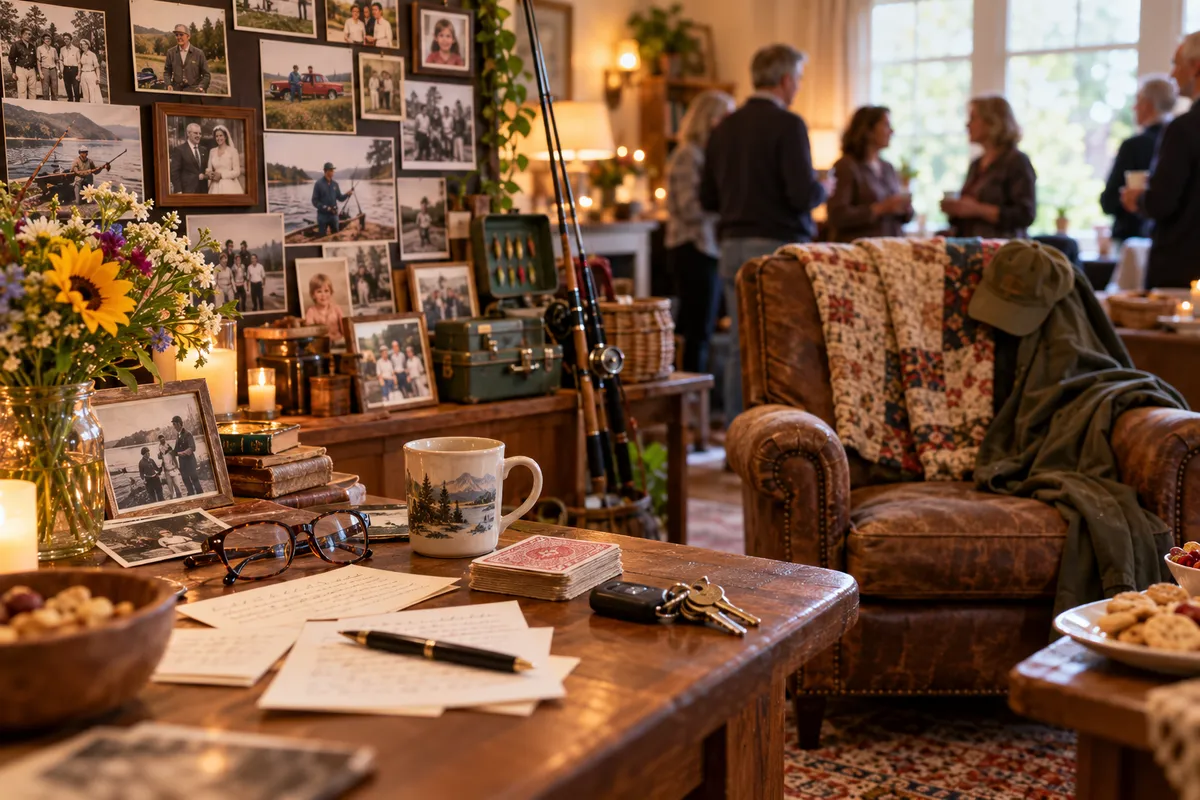
Twelve Ways to Make a Gathering Feel Like Them
Walk into most gatherings after a death and you can tell within a minute whether the room knows who it is for. Some rooms could belong to anyone. Folding chairs, a guest book, a framed photo on an easel, and soft music nobody chose. Other rooms tell you, before anyone says a word, that the person being remembered spent forty years in the garden, or never missed a Friday night football game, or made the worst puns in three counties.
The difference is rarely money. It is a handful of decisions made with the person in mind. Here are twelve to consider. Use one, use six, or use none of them and invent your own.
1. A memory table
Gather the objects that only make sense together because of who owned them. Reading glasses, a coffee mug with a chip in the handle, a well-worn deck of cards, the car keys with the bottle opener attached. A memory table gives guests something to stand near while they work up the courage to talk, and it starts conversations nobody would have started on their own.
2. A photo wall that tells the whole story
Resist the urge to use only flattering recent photos. Put up the baby picture, the questionable haircut from 1974, the wedding, the fishing trip, the grandchildren, and the hospital bed if the family is comfortable with it. A whole life is more moving than a highlight reel, and guests will find themselves in pictures they forgot existed.
3. The collection on display
If they collected something, show it. Model trains, quilts, coins, baseball caps, recipe boxes, fly fishing lures. A collection is a portrait of attention, and it tells guests what this person loved enough to spend years on.
4. Their chair
Some families place the person's favorite chair in the room with a jacket draped over the back or a hat resting on the seat. Nobody sits in it. It is a quiet piece of honesty about who is missing, and people tend to gather near it rather than avoid it.
5. A storytelling circle
Pick a time, perhaps an hour into the gathering, when anyone who wants to can share a short story. Someone with a steady voice can invite people in and keep things moving. The stories that come out of these circles are often funnier and more revealing than anything prepared in advance.
6. Open-house hours
Instead of a fixed start time, invite people to come and go between, say, two and six on Sunday. Open-house hours take the pressure off guests who can only stay a few minutes and give the family room to breathe between waves of visitors.
7. Their music, played quietly
Build a playlist of the songs they actually listened to, not the songs someone thinks are appropriate. If they loved Patsy Cline, play Patsy Cline. Grandchildren are often good at building these playlists, and it gives them a meaningful job.
8. Memory cards
Set out small cards and ask guests to write down a story or a moment they shared with the person. The family will not read them that day. They will read them a month later, at the kitchen table, when the house is quiet. Those cards are often what families keep longest.
9. Their food on the table
Serve something they loved to make or loved to eat. Her lemon bars. His chili. The particular brand of potato chips nobody else in the family would buy. Food carries memory in a way almost nothing else does.
10. A map of their life
Put up a large map and mark the places they lived, worked, served, and traveled. Then hand guests a pin and ask them to mark where they first met. By the end of the day the map shows the reach of one life in a way that surprises everyone, including the family.
11. Something to take home
Seed packets from the garden. Copies of a favorite recipe. A fishing lure from the tackle box. Guests appreciate a small, personal reminder, and it extends the gathering into the weeks that follow.
12. Their voice
A saved voicemail, a clip from a home video, a recording of them telling a favorite story. Some guests will find this comforting and some will find it hard, so consider playing it in a side room or a quiet corner where people can choose to listen.
The practical questions nobody asks until the day of
Ideas are the easy part. The questions that decide whether a gathering goes smoothly are less romantic. Where will people park, and what happens if fifty cars show up on a residential street? Can everyone get in the door, including guests who use walkers or wheelchairs? Are there enough restrooms? Who sets up the tables, keeps the coffee going, and folds the chairs at the end? How long should the gathering last, and who will gently signal that it is winding down?
None of these questions should keep you from holding a gathering at home, in a park, or anywhere else that feels right. They are simply the reason it helps to have someone on your side who has answered them before. Most funeral teams will help with a gathering wherever it is held, setting up the memory table, managing the parking, and handling the details so the family can spend the afternoon with the people who came.
Your next step
When you talk with a funeral team, ask which of these ideas they have helped other families create and what they can set up for you, wherever the gathering is held.