
Understanding the Four Family Roles
Short Summary
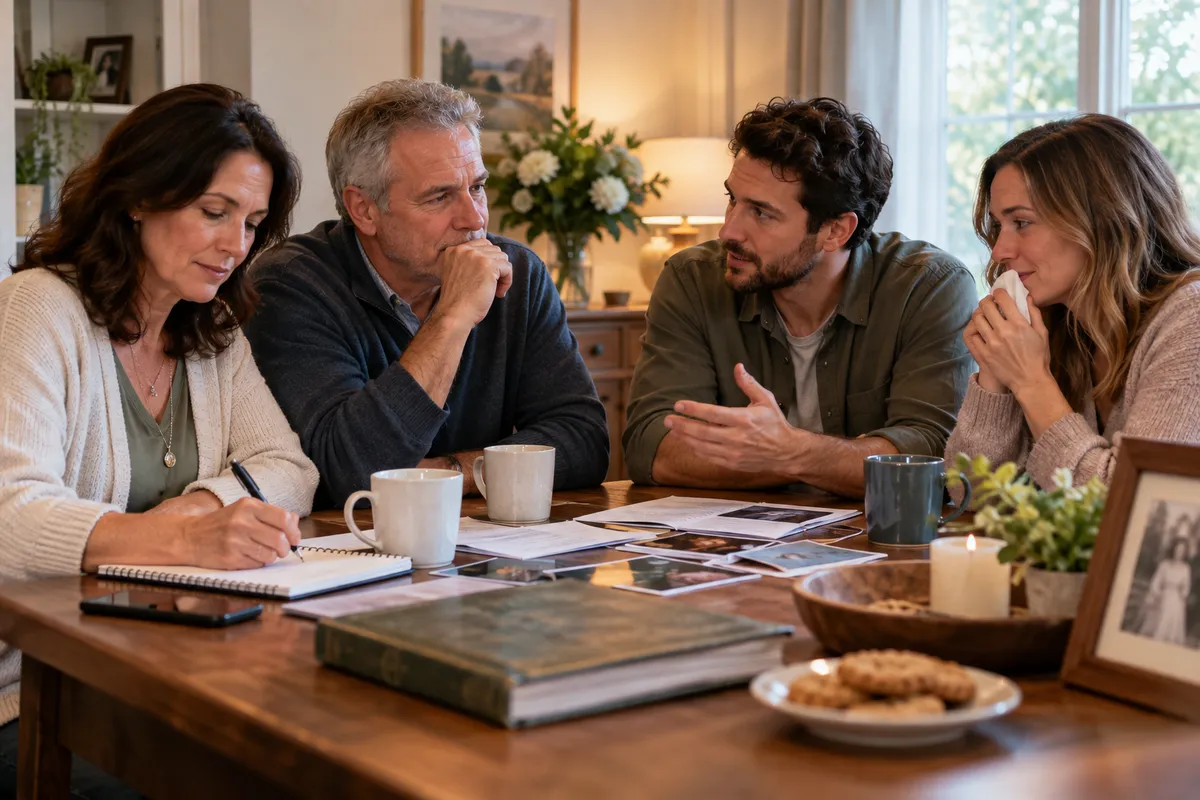
Every family tends to settle into four recurring roles, shaped early in life and often resurfacing during funeral planning. Recognizing these roles- the Planner, the Guardian, the Catalyst, and the Feeler- can help families understand why certain reactions and disagreements happen, and why involving more voices, not fewer, usually leads to a farewell that better reflects the whole family.
Key Points
Four Core Roles: Most families fall into four recurring roles, the Planner, the Guardian, the Catalyst, and the Feeler, shaped early in life by birth order and by watching how parents handled family life.
The Planner: Often the eldest daughter, she organizes gatherings, keeps everyone connected, and is usually the one who called family members with the news. She holds the family together rather than controlling it.
The Guardian: Often the eldest son, he grew up feeling responsible for protecting the family. In hard conversations, this can come across as guarded or firm, even though it comes from care rather than difficulty.
The Catalyst: Often the youngest son, sometimes the one who moved away or felt different from the rest. He tends to challenge the plan and raise questions others avoid, which can be uncomfortable but useful.
The Feeler: Often the youngest daughter, she is the most openly emotional member of the family and is closely connected to the youngest generation, giving her valuable insight into what will feel meaningful to them.
Old Roles, New Conflict: As adults, many people grow into different roles within their own households, but when the birth family reunites after a loss, old childhood roles often resurface, which can create friction over decisions.
More Voices Help: Having more family members present during planning, rather than fewer, tends to lead to decisions that reflect the whole family, since more of these roles are represented in the room.
Complicated Families: Not every family or relationship fits neatly into these roles. For families with estrangement or difficult history, honoring where each person actually is matters more than following an old pattern.
Full article - Understanding the Four Family Roles
When a family gathers to plan a farewell, something interesting happens. Old patterns show up again, patterns that started decades earlier, often in childhood.
Family researchers have long noticed that most families settle into four core roles. These roles usually form early, shaped by birth order and by watching how our parents handled things. They tend to resurface, almost automatically, whenever the family comes back together for something important.
Understanding these roles will not make planning a farewell easy. But it can help you understand why certain conversations feel harder than they should, and why the people you love sometimes react the way they do.
The Planner
The Planner is often the eldest daughter. She is the one who organizes the holidays, keeps everyone's phone number, and remembers who is allergic to what. She is usually the one who called everyone with the news.
She is not trying to control the process. She is trying to hold the family together, the same way she always has.
The Guardian
The Guardian is often the eldest son. He grew up feeling responsible for protecting the family, and that instinct does not go away. In a hard conversation, he may come across as firm, guarded, or slow to open up.
He is not being difficult. He is doing the only job he has ever known how to do for this family.
The Catalyst
The Catalyst is often the youngest son, sometimes the one who moved farthest away or grew up feeling a little different from the rest. He tends to ask the questions no one else wants to ask, or suggest the idea no one else considered.
His role has always been to challenge the plan, not to sink it. That instinct can be useful now, even when it feels disruptive in the moment.
The Feeler
The Feeler is often the youngest daughter. She grew up as the most sensitive member of the family, and she still is. She may cry more openly than anyone else in the room, and she may seem the least equipped to handle logistics.
But she is often the one most connected to the youngest generation, the grandchildren and great grandchildren. Her instincts about what will feel meaningful to them are worth listening to.
Why old roles cause new conflict
Here is where things get complicated. As adults, many of us grow into different roles in our own households. A youngest son might become the steady planner of his own family. A youngest daughter might become the one everyone else leans on.
Then a parent dies, and the birth family comes back together. Without anyone meaning to, the old roles snap back into place. The eldest sibling who has always been the Planner may dismiss an idea from a younger sibling, even a good one, simply because that is the pattern the family has always followed.
This is rarely about the idea itself. It is about roles that were assigned decades ago and never fully updated.
Why more voices usually help
It might seem like planning would go faster with only one or two decision makers in the room. Often, the opposite is true. When more family members are present, more of these roles get represented, and decisions tend to reflect the whole family rather than just one part of it.
If you notice a disagreement forming, it may help to name what is happening out loud. Something as simple as acknowledging that everyone processes this differently can ease the tension.
If your family relationships are complicated
Not every family fits neatly into these roles, and not every relationship is close or easy. If your family includes estrangement, old wounds, or complicated history, these patterns may look different, or may not apply at all. That is okay. What matters most is finding a way forward that honors your loved one and respects where each person actually is, not where an old role says they should be.