What Happens to Mom's Ashes?
A Conversation Worth Having Before the Time Comes
Perhaps your mom has already told you she wants to be cremated.
That seems straightforward enough.
But have you talked about what happens to her ashes afterward?
It's a question many families don't think about until the cremation is complete.
Then someone brings the urn home. It sits on a shelf or in a closet while everyone tries to decide what to do next.
Sometimes weeks become months. Months become years.
And the decision never quite gets made.
There's nothing wrong with taking time to decide. But knowing the possibilities before the time comes can make things easier for everyone.
Cremation isn't the final decision
Choosing cremation is just one part of the conversation.
Families still have to decide how they want to remember their loved one, whether to gather together, and where the ashes will eventually rest.
There are several possibilities.
Some families keep the ashes at home. Others choose burial in a cemetery, placement in a columbarium, or scattering in a place that held special meaning.
The right choice depends on the person's wishes, your family's beliefs, and what will bring comfort in the years ahead.
One question is especially worth considering.
Will there be a place where family members can return to remember?
The value of having a place to visit
For some people, a permanent resting place is an important part of remembering.
It gives children and grandchildren somewhere to go.
There may be birthdays when someone wants to leave flowers. An anniversary when a daughter simply wants to sit quietly. A holiday when a family member feels the need to be close.
Not everyone needs a physical place like that.
But it's worth talking about before deciding.
Especially if family members live in different communities or have different ideas about what should happen to the ashes.
Options available in Evansville
Here in Evansville, Sunset Funeral Home, Cremation Center & Cemetery offers a Community Garden for the permanent placement of cremated remains.
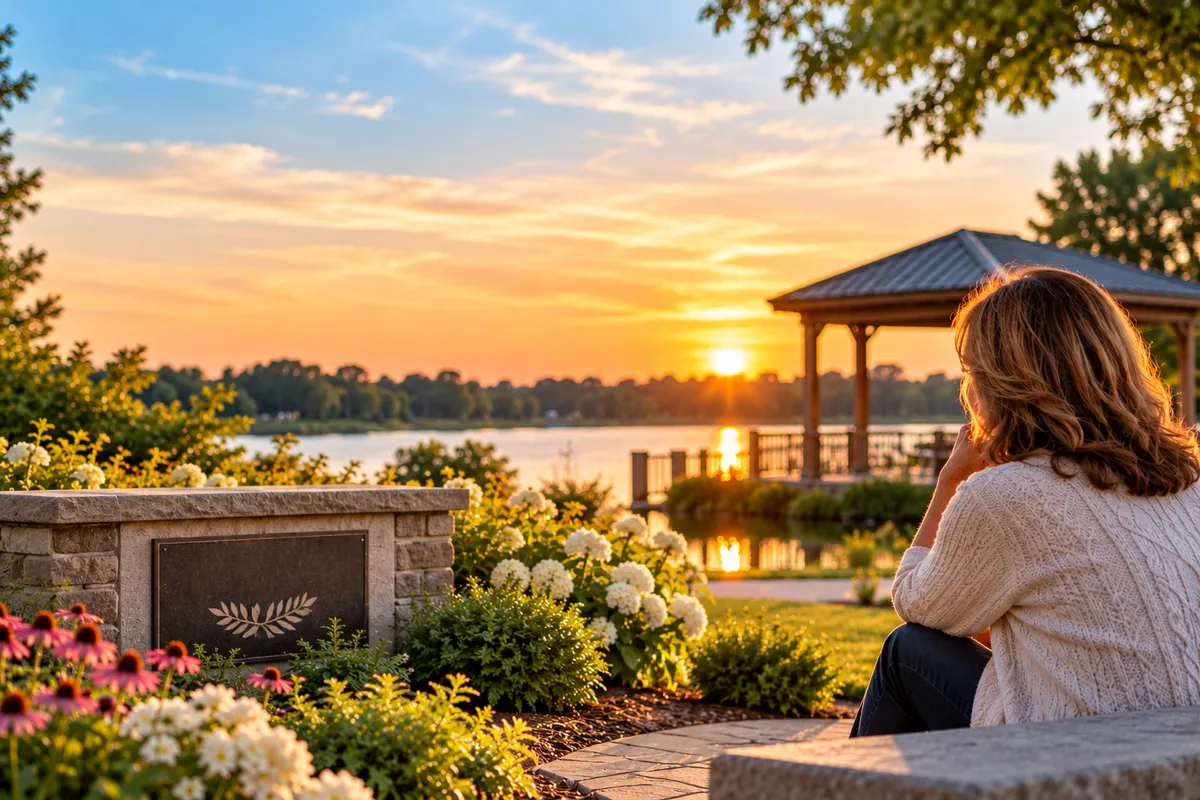
The ashes are placed securely in a shared underground vault beneath a granite base, near Sunset's Butterfly Garden. The area includes a memorial marker, creating a place family members can return to visit.
Sunset includes a certificate for Community Garden placement with its cremation packages.
Another possibility is Sunset's Lakeside Water Release.
During a ceremony at the Lakeside Pavilion, the ashes are placed in a biodegradable cremation pillow and released into Lake Sunset. An engraved memorial brick near the pavilion provides a lasting place of remembrance.
Families may find one of these options meaningful, or they may prefer something entirely different.
You can read more about the Community Garden and Lakeside Water Release options on Sunset's website.
Four questions to discuss with Mom
You don't have to begin with a complicated discussion about funeral arrangements.
Start with a few questions.
"Have you thought about what you'd like us to do with your ashes?"
She may already have a preference.
"Is there a place that would be meaningful to you?"
It might be a cemetery, a special place outdoors, or somewhere connected to family history.
"Would you want us to gather together?"
A private ceremony, a family meal, or another kind of remembrance can be part of the decision.
"Would you like us to have a place we can visit?"
This may be the question that helps your family think beyond the immediate arrangements.
Listen carefully. You don't have to agree on every detail during the first conversation.
If Mom has clear wishes, write them down and make sure the appropriate family members know about them.
Don't leave the decision to chance
There is no single right answer about what should happen to someone's ashes.
But there is a difference between making a thoughtful choice and avoiding the question until everyone is grieving.
You may discover that Mom has a very definite idea about what she wants.
Or perhaps she's never thought about it and would appreciate knowing the possibilities.
Either way, the conversation is worth having.
Because choosing cremation tells us how someone will be cared for after death. Deciding what happens next can help a family create a lasting way to remember.